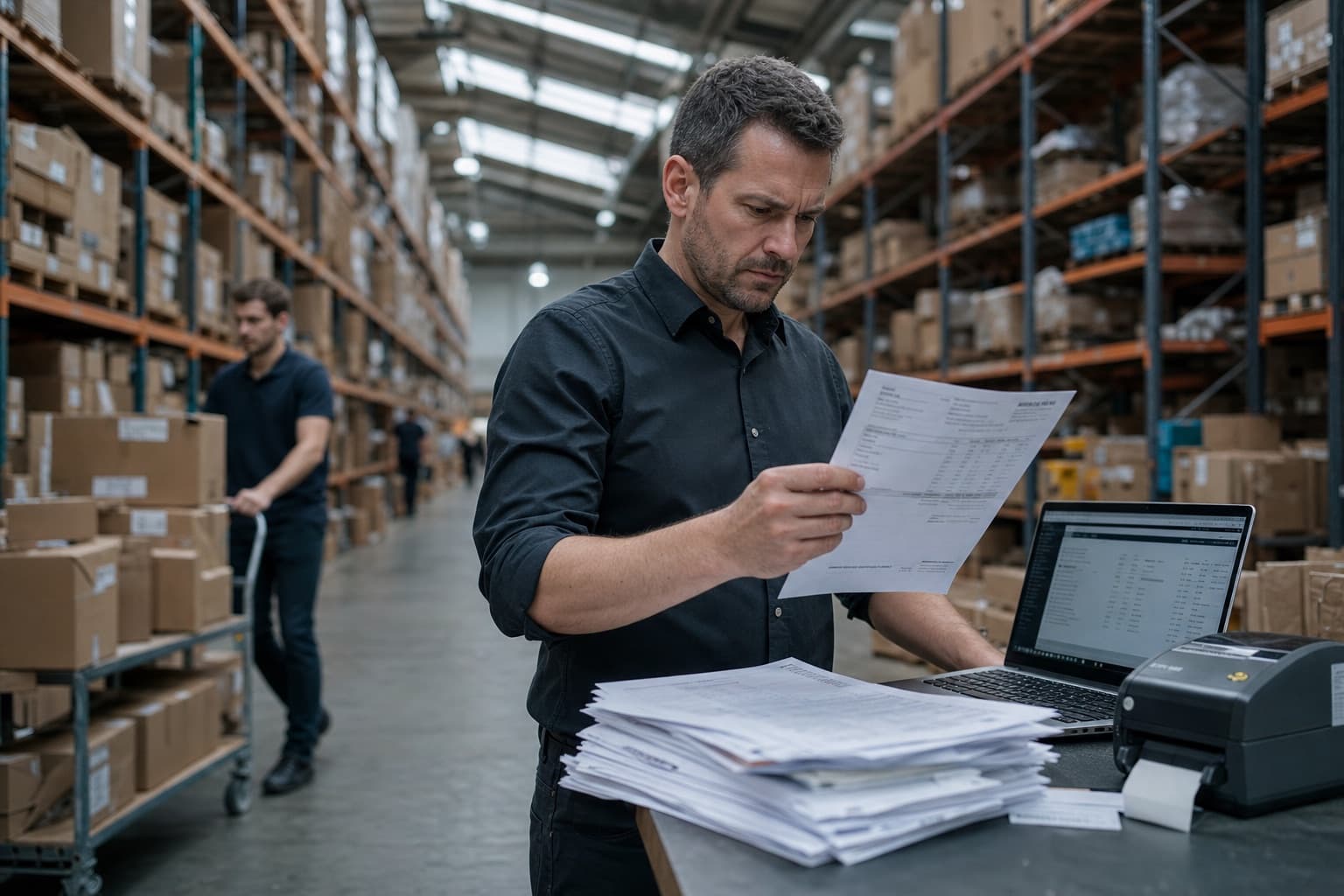
14 fake stores taken down in two weeks
Fake stores posing as an upmarket US e-commerce brand ran on Shopify and WooCommerce. DefendDomain found seven within three days of monitoring going live, the first within nine hours. Five fake store domains were taken down in the first week and 14 in the first two weeks, without the brand's lawyers.
Fake stores using your name right now? Report a live attack. Free to report, no account needed.
A brand sold in many places gives a fake store cover
Fake online stores were posing as the brand, and it already had an enterprise brand-protection provider. The brand sells through its own online store and through partners and resellers around the world. It also owns a large estate of company domains.
That reach is good for business, and it is also what can make a fake store hard to catch. When a brand is legitimately sold in many places, one more store carrying its name looks normal to a shopper. The shopper has no list of authorised sellers to check, and little reason to go looking for one while a discount is on screen.
A large estate like this can make the work harder for the brand's own team. A store carrying the brand's name could be one of its own sites, a partner's, a reseller's or a fake. Someone has to work out which before anything can be reported. With partners in many countries and a long list of company domains to rule out, that check can hand each fake store extra time to trade.
How the fake stores worked
The fake stores posed as the brand to take its customers' money. Each was a standalone online store on a domain of its own, built on an off-the-shelf e-commerce platform, which puts it outside the reach of tools built for marketplace listings. Two ran on Shopify and five on WooCommerce. They were built from two different kits, as if two separate operations were behind them.
E-commerce fraud through fake stores and cloned webshops is common. In the US, shopping scams were the most reported scam on social media in 2025, according to the Federal Trade Commission. More than 40% of people who reported losing money to a scam on social media said it started when they ordered something they had seen in an ad. Some of those ads, the FTC notes, led to sites impersonating well-known brands and offering big discounts.
Spreading stores across more than one platform suits whoever runs them, because a report to one platform does nothing about a store on another. The domains behind them were registered with registrars in four countries, so there was no single company to report the stores to and no single process to follow.
A fake store costs a brand like this in more than one place. A shopper who pays one believes they have bought from the brand, and when the order never arrives, or arrives as something else, the complaint can come to the real brand. Customer service can end up answering for orders the brand never took. Partners and resellers can be undercut by a fake offering steep discounts on the same name. And the people chasing each fake, inside the brand and outside it, are paid for their time.
What the brand had before
In the brand's experience, its enterprise brand-protection provider was finding fewer fake stores than DefendDomain went on to find. The brand's takedowns were going through its lawyers.
Taking fake stores down by hand, or through lawyers, is the slow route. Each store has to be written up with evidence and reported to whoever can act on it, and every registrar, platform and host has its own abuse process. Reports get passed back (“not our customer”, “contact the registrar”), and a store that comes back on a new domain starts it all again.
Run through lawyers, each of those steps can be billed, and while the case moves, the store can keep taking orders. Inside the brand, the rest can land on people with other jobs: someone in e-commerce, legal or customer service gathering screenshots and answering chasers instead of running the business. The alternative was to buy the provider's enterprise takedown service as well.
What changed in the first two weeks
The first fake store was flagged within nine hours of monitoring going live. Within three days, we had found seven fake stores posing as the brand.
Six of the seven were flagged by our certificate monitoring. The seventh was raised by one of our analysts, after the automatic checks had given its domain a low score.
Each one came with the evidence a takedown needs: screenshots of the fake store beside the real site, and the details of the domain and hosting behind it. Nobody at the brand had to gather it.
In the first week, five fake store domains were taken down.
More fake stores appeared after the first seven, and each was found and reported the same way. By the end of the second week, 14 fake stores had been taken down.
DefendDomain now runs the brand's takedowns, from the first report through every follow-up and check, with the status of each one visible to the brand's team. That includes the work that eats the most time by hand: checking whether each reported store is still up, following up with any company that has not acted, and watching for the same store coming back on a new domain. That replaced two costs at once: the enterprise takedown service the brand would otherwise have bought, and the lawyer and staff time takedowns would have taken.
Takedowns are unlimited on DefendDomain's Pro and Enterprise plans, and on Enterprise our analysts run them for you, so a seventh fake store, or a seventeenth, adds no extra charge.
What decides how much a fake store costs
A brand with a large, legitimate footprint needs it: partners and resellers are how it sells. The part it controls is how long each fake store gets to trade.
Against fake stores, two things decide the damage: how soon each one is found, and how fast it comes down. By the time a customer complains about an order from a fake store, the cost can already be the brand's. For this brand, the first fake store was flagged within nine hours, 14 fake stores came down inside the first two weeks, and none of it went through its lawyers.
If fake stores are trading on your name, see how to stop fake online stores. If you have just found one, start with what to do when someone clones your website.
Check your own domain
See which lookalikes of your web address are already registered, and which can send email.
Run a free scanChecks 150+ lookalikes of your domain in a couple of minutes and emails the report to your work address. No account, no card.
Happening to you now?
Report a live attackFree to report. No account needed. One of our team calls you back, usually the same working day. Out of hours, email security@defenddomain.com.

More cases
All case studies- Fake invoices
- Real
- brandname.com
- Fake
- brandname-products.com
E-commerce and wholesale products · Mid-2026
Products company gets a fake domain taken offline after the domain emailed its customers about new bank details
Read the case studyOutcome
On anti-phishing blocklists the same day. The registrar later took the domain offline.
- Copied website
- Real
- brandname.com
- Fake
- brandname.free-host.example
AI solutions and consulting · Mid-2026
AI consultancy gets a copy of its website removed from a free hosting platform in about a day
Read the case studyOutcome
Offline about 24 hours after the copy was confirmed.